
Foundation Repair in Minneapolis, MN
A crack ran up the basement wall near the water heater, barely visible at first. By early summer it had widened enough to catch a fingernail. Cracks like this are one of the clearest signs a Minneapolis home needs foundation repair. Clay soils, freeze-thaw cycles, and moisture around the foundation have already started to move the structure.
SafeBasements is a foundation repair company that focuses on solving those problems for Minneapolis homeowners. For more than 35 years, our team has used engineered repair systems built for local soil conditions, from pier systems that support settling foundations to wall stabilization options for bowing or cracked basement walls. If you are searching for a foundation repair contractor near you because you have noticed movement, new cracks, or moisture along the base of your walls, we start with a free inspection so you can see what is happening and what it will cost to fix it.
What Causes Foundation Problems in Minneapolis?
In Minneapolis, most foundation problems start with the ground the house is sitting on and the way our weather treats it. A lot of the city was built over heavy, moisture holding clays and silty soils. When you get a long wet spell in spring or a stretch of storms rolling through the lakes area, those soils soak up water and swell. During dry summers, they shrink back. That slow, constant breathing of the ground shows up inside as thin cracks that keep coming back, a corner of the basement that always seems to feel damp, or a hairline gap that was not there the year before.
Winters add another layer. When the first deep freezes hit and the frost line drops, the soil around your foundation locks up and expands. After a thaw, it relaxes. Over years of freeze and thaw, especially in older neighborhoods with stone or block foundations, that movement can push walls in, loosen footings, or leave small voids under slabs. Homeowners in places like Longfellow, Nokomis, or Northeast often notice it as a wall that is just beginning to lean or a floor that suddenly feels like it has a soft slope toward one side.
Water is the other major piece. In parts of the city where houses sit below the street, near alley slopes, or closer to the river corridor, rain and snowmelt naturally want to run toward the foundation. Short downspouts, flat grading, or missing drainage give that water nowhere to go. It pools along the outside of the wall, builds pressure, and looks for a way in. Inside, that can appear as a damp line where the floor meets the wall, small leaks after every storm, or musty smells that never quite go away. Over time, that same pressure can also help open up existing cracks or push a wall a little farther out of line.
On top of all of that, the way many Minneapolis homes were originally built still matters. Older houses often went in before today’s compaction standards, and some additions were set on fill that was never fully settled. When that soil finally compresses years later, one part of the foundation can drop slightly compared to the rest. You see it as diagonal cracks working out from the corner of a window, doors upstairs that used to close cleanly but now rub at the top, or trim pulling away from the wall in one room but not the others. All of it traces back to how the local soils, water, and weather have treated the structure since the day it was poured.
Signs Your Minneapolis Home May Need Foundation Repair
Most foundation problems in Minneapolis show up as small changes you can see and feel long before anything dramatic happens. If several of these are true in your home, it is usually a sign that the foundation is starting to move and a repair contractor should take a closer look.
Cracks in walls and floors
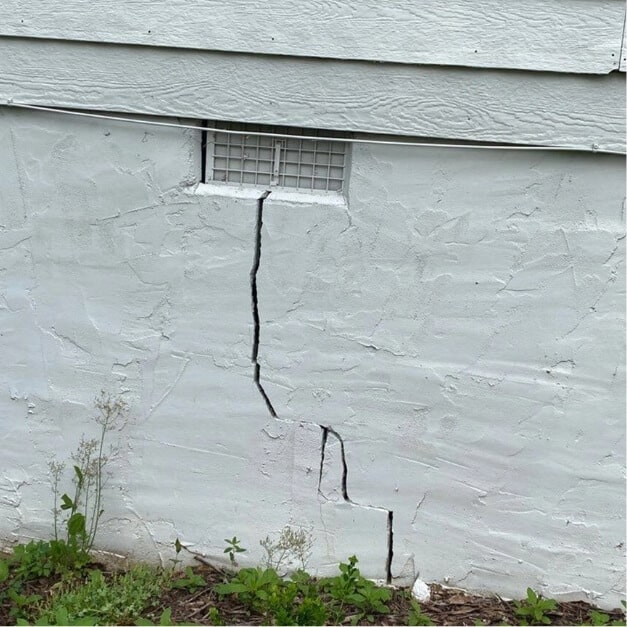
New cracks or cracks that keep getting longer are one of the clearest warning signs. In the basement, that might be a horizontal line running through a poured concrete wall, or a stair-step pattern along the joints of a block wall. Upstairs, you may see diagonal cracks stretching from the corner of a window or door toward the ceiling, or thin lines working across a plaster or drywall surface. When these keep returning after patching, it often points to ongoing movement in the foundation rather than simple cosmetic wear.
Floors that slope, dip, or feel uneven
A room that used to feel flat may start to lean toward one corner, or there may be a spot where you can feel a dip every time you walk across it. In some homes you can roll a small object on the floor and watch it travel to the same low area every time. These changes can be tied to settlement along one part of the footing or to shifting support where the structure meets the foundation.
Bowing or leaning basement walls
In many Minneapolis basements, especially in older houses with block walls, outward soil pressure and freeze–thaw cycles can cause a wall to lean or bow inward. You might notice the wall is no longer straight when you look down its length, or see a long crack near the middle of the wall with the surface below it starting to curve. Even a small bow can worsen over time if the pressure behind the wall is not relieved.
Doors and windows that do not work like they used to
A door that suddenly needs an extra shove to latch, a bedroom door that swings open on its own, or a window that sticks halfway and will not close smoothly can all be signs that the frame has shifted out of square. You may also see new gaps at the top or bottom of exterior doors where light shows through. When several openings change at once, it often traces back to the foundation moving.
Gaps, separations, and misaligned trim
Baseboards pulling away from the wall, crown molding separating at the corners, or a visible line where the ceiling and wall no longer meet cleanly can indicate that the structure behind the drywall has shifted. In some homes you may see cabinets or built-ins that are no longer level with the ceiling line, or countertops that no longer sit flush against the wall.
Moisture and cracks together
Water issues alone may fall under basement waterproofing, but when moisture shows up along with structural signs, it becomes part of the foundation picture. A damp line where the wall meets the floor, water seeping through a crack during heavy rain, or a musty smell that lingers near visible cracking can signal both hydrostatic pressure and a weakened section of wall. In those cases, treating it only as a leak often leaves the underlying movement unaddressed.
If you recognize several of these signs in your Minneapolis home, it is a good time to have a local foundation repair company inspect the structure. A detailed inspection can tell you whether you are seeing normal aging or active foundation problems that should be repaired before they lead to larger, more expensive damage.
Foundation Repair Services in Minneapolis, MN
Foundation problems do not look the same in every Minneapolis home, so the repair should not be one-size-fits-all either. SafeBasements pairs a detailed inspection with repair systems that match the way your foundation was built, the soil it sits on, and the kind of movement you are seeing.
Foundation settlement repair
When a section of your foundation has started to sink, pull away, or feel lower than the rest of the house, the goal is to transfer the weight off unstable soil and down to something that will not move.
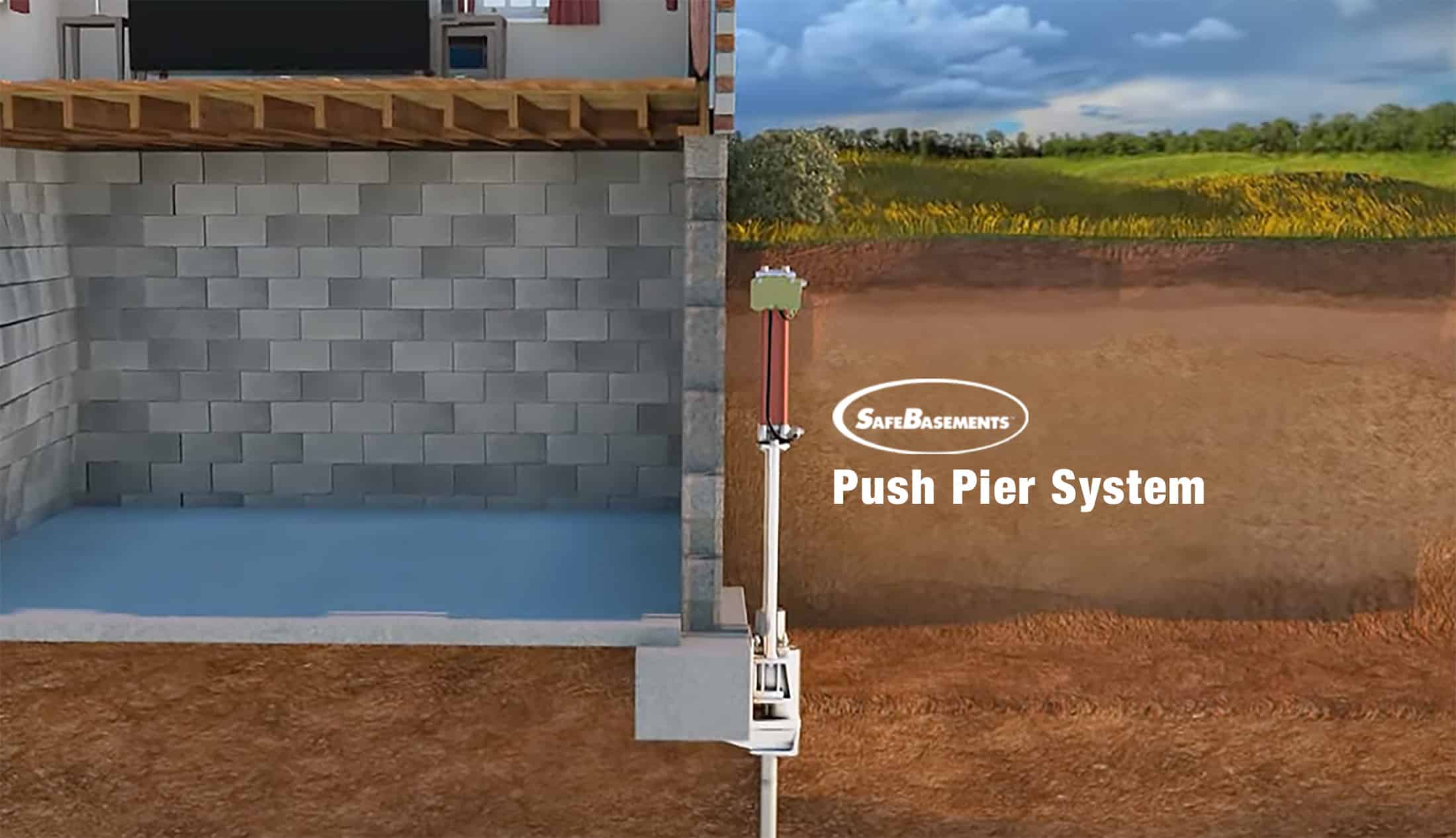
SafeBasements uses the patented SafeBase™ Push Pier System for many Minneapolis settlement jobs. Steel piers are driven down beside the footing to reach load-bearing strata or bedrock, then brackets connect those piers to the foundation so the structure is supported on stable material instead of soft, shifting soils. In situations where the structure is lighter or access is limited, SafeBase™ Helical Piers can be used. These screw-shaped piers are advanced into the ground to a calculated depth and torque, then locked to the foundation to provide immediate structural support.
Both pier options are designed to stabilize the settled area and, in some cases, allow the foundation to be lifted closer to its original position. Your inspector will explain which pier type fits your home, the number of piers required, and what that means for the total cost of the repair.
Bowed and leaning wall repair
Basement walls in Minneapolis take constant pressure from wet clay soils and winter frost. When that pressure overcomes the strength of the wall, it begins to lean or bow inward. SafeBasements offers several ways to bring those walls back under control, depending on how far the movement has gone.
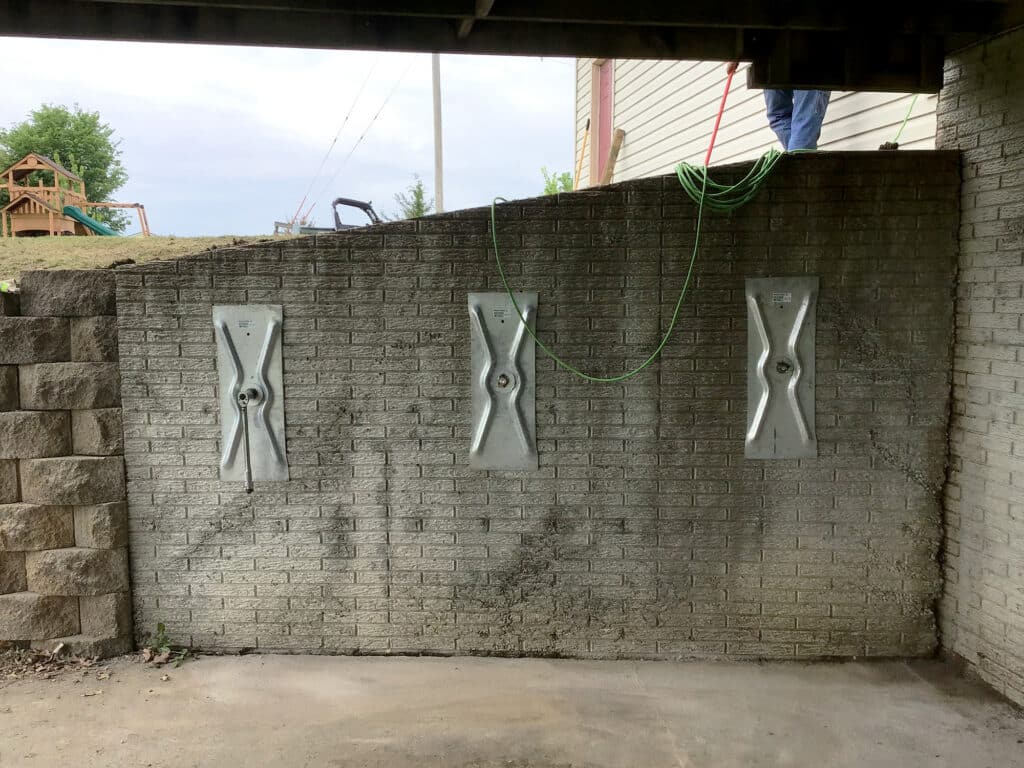
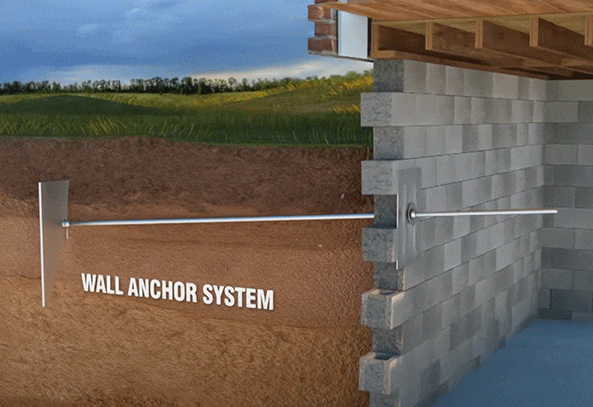
For walls with noticeable bowing or displacement, the SafeBase™ Wall Anchor System is often recommended. Anchors are installed in stable soil away from the foundation and connected to the interior wall with steel plates. Over time, careful adjustments can help straighten the wall while locking it against further movement.
When outside access is limited, or when interior bracing is the better fit, the SafeBase™ Waler Wall Support System uses steel beams that run from the floor to the joists to brace the wall. The load is spread out and tied into the structure, helping to halt ongoing inward movement.
In cases where the wall has only begun to move and cracks are still relatively small, SafeBase™ Carbon Fiber Straps provide a low-profile reinforcement option. These straps are bonded directly to the wall and anchored at the top and bottom, adding strength without taking up much interior space or requiring large excavations.
Foundation crack repair
Hairline cracks can seem harmless, but in many Minneapolis basements they grow wider with each season and become a path for water. SafeBasements uses professional crack injection methods, typically with urethane or epoxy, to seal cracks through the full thickness of the wall.
Urethane injections are often used where water is actively finding its way through, because the material can expand and fill fine voids. Epoxy injections are suited to situations where the goal is both sealing and structural bonding. Your technician will look at the size, pattern, and location of the crack before recommending the right approach.
Built for long-term stability
All of these foundation repair services are installed by trained crews who work with these systems every day in Minneapolis and the surrounding area. Major repairs come with a lifetime transferable warranty, so the support you put under your home continues to protect it for future owners as well.
When you schedule an inspection, your SafeBasements foundation repair contractor will walk you through what is happening to your foundation, which repair option makes sense, and what the project is likely to cost before any work begins.
How Much Does Foundation Repair Cost in Minneapolis?
Foundation repair pricing in Minneapolis changes from house to house. The final number is shaped by how far a wall has bowed or leaned, how many feet of foundation have settled, how easy it is to reach the work area, and whether the repair calls for crack injection, anchors, piers, or a combination of systems. A single injected crack may be a modest project, while a settled corner that needs several piers or a full run of anchors is a much larger investment.
SafeBasements starts with a free, in-home inspection so you are not guessing. A foundation repair contractor walks the basement and exterior with you, takes measurements, documents what they see, and then provides a written proposal that explains what is happening, which repair is recommended, and what it will cost. That gives you real numbers from a Minneapolis foundation repair company instead of rough estimates or generic price ranges.
Why Homeowners in Minneapolis Trust SafeBasements
When you decide to let someone work on your foundation, you are trusting them with the structure of your home, not just a line item on a repair list. Homeowners across Minneapolis come to SafeBasements because the company understands how local soils and winters treat a house and builds that into every repair plan.
A few things make SafeBasements stand out as a Minneapolis foundation repair company:
-
Decades of local experience
More than 35 years working in Minneapolis and the surrounding metro means they have seen how clay-rich soils, river influence, and freeze–thaw cycles affect basements in older neighborhoods and newer developments alike. -
Engineered systems matched to the problem
SafeBase™ piers, wall anchors, bracing systems, and carbon fiber reinforcement are chosen based on your specific foundation type, the amount of movement, and the soil conditions on your lot, rather than a single “one system fits all” approach. -
In-house, trained crews
The technicians who show up at your home install these systems every day. They are used to working in tight city lots, short driveways, and finished basements, and they know the difference between cosmetic aging and true structural movement. -
Lifetime transferable warranty
Most major repairs come with a lifetime transferable warranty. The support you put under your home now stays with the property if you ever sell, which can be a point of confidence for both you and a future buyer. -
Clear inspections and no-pressure proposals
Inspections are focused on showing you what is happening, not on rushing you into a contract. You see where the structure has moved, which repair is recommended, and how the warranty works before you decide what to do next.
When you add all of that together, you are not just hiring someone to patch a crack. You are working with a Minneapolis foundation repair contractor that plans, installs, and stands behind structural repairs designed to hold up through many more Minnesota winters.
Schedule Your Foundation Repair Inspection in Minneapolis
If you are seeing new cracks, a floor that no longer feels level, or a basement wall that looks like it is starting to lean, the next step is to have your foundation inspected by a local contractor who works in Minneapolis homes every day. SafeBasements offers free, in-home foundation repair inspections so you can find out what is happening and what it will take to fix it.
During your appointment, a foundation repair contractor will walk the basement and exterior with you, explain what they see, and provide a written proposal with the recommended repair and the cost.
Contact SafeBasements today to schedule your foundation repair inspection in Minneapolis and take the first step toward stabilizing your home.
Frequently Asked Questions (FAQs)
Yes. Left unaddressed, foundation movement gets worse, not better. Cracks widen, walls lean further, and the repairs needed later cost more than catching the problem early. Foundation repair stabilizes the structure and, in most cases, stops further settling or bowing from continuing.
Every project starts with a free inspection to see what is actually happening to the foundation. From there, SafeBasements identifies the cause of the movement and recommends the system built for it, whether that is push piers, helical piers, wall anchors, or crack injection. Work moves forward only after you have seen the proposal and understand what is being done and why.
SafeBasements has worked on Minneapolis foundations for more than 35 years, handling settlement repair, bowing and leaning walls, and crack injection. An inspector visits the home, assesses what is happening, and walks through the repair options before any work begins.
It depends on what is causing the movement. Push piers work well for homes with heavier structures, where reaching load-bearing soil or bedrock matters most. Helical piers are often used on lighter structures or in tighter access conditions. An inspection determines which system fits the specific settlement pattern in a given home.
A stabilized foundation removes a red flag that shows up in home inspections and can slow down or complicate a sale. Buyers and appraisers treat structural issues as a liability, and a documented repair with a transferable warranty gives a seller something concrete to point to instead of an open question.
Major repairs come with a lifetime transferable warranty, and that warranty moves with the house if it is sold. The warranty covers the structural work itself, not general home maintenance, so periodic inspections are still worth doing on your own.
Yes. SafeBasements provides a free, in-home inspection and a written estimate before any work begins. What you pay depends on the repair method needed, how many piers or anchors are required, and how accessible the work area is, all of which the inspector will walk you through on site.
Foundation repair itself is a routine, well-established process when done by trained crews using engineered systems. The larger risk is delaying it. Cracks, uneven floors, and bowing walls tend to get worse the longer they are left alone, and early repairs are almost always less invasive than repairs made after years of additional movement.
Almost never. Full foundation rebuilds are rare and reserved for the most severe structural failures. Most of what homeowners notice, settling, bowing walls, cracks, is addressed by stabilizing and reinforcing the existing foundation with piers, anchors, or crack injection rather than replacing it. An inspection will tell you which repair actually applies to your situation.